
Brought to you by Filippatos Employment Law, Litigation & ADR
Celebrating Our Country’s Indigenous People
November is National Native American Heritage Month, a month-long remembrance first officially recognized back in 1990 by President George H. W. Bush to celebrate the incredibly rich and diverse cultures, traditions, and contributions of Native American communities. For employers, it’s a real chance to boost cultural awareness and create a workplace where everyone feels included.
But here’s where things get tricky. As employment law attorneys, we constantly hear from New York employers asking: “Can we, and should we, celebrate this in our workplace?”
The short answer? Yes you can, but you need to be careful, as celebrations can be a legal minefield. What starts as a genuine attempt to celebrate culture can quickly turn into a situation involving workplace harassment, racial discrimination, or ethnic discrimination. Trust us, as a New York ethnic workplace discrimination lawyer, we’ve seen it happen more times than we’d like to admit. In this post, we’re breaking down the legal risks New York employers need to watch out for, plus giving you a practical, compliance-focused guide to honoring Indigenous people in a way that’s respectful and won’t create a hostile work environment.
Recognizing Native American History: The Beginnings
As far back as the 1970s, the beginnings of a national honoring for Native American history rang through the halls of Congress. Congress would enact legislation and subsequent Presidents would issue annual proclamations declaring a week, a day, or a singular month to celebrate our Indigenous peoples’ heritage. One of the earliest proponents of a day honoring our Indigenous people came from Doctor Arthur Caswell Parker, the Director of the now-titled Rochester Museum of Arts and Sciences. A respected philosopher, author and anthropologist, he was the first American Indian to serve as the Commissioner of Indian Affairs in the Department of the Interior, and served as the First President of the Society for American Archaeology, from 1935-36.
Back in 1976, the same year America celebrated its 200th birthday, Congress decided it was finally time to recognize Indigenous peoples in a more meaningful way. They passed a resolution that gave President Ford the green light to officially declare a week in October as “Native American Awareness Week.” Ford made it happen on October 8, 1976, issuing a presidential proclamation. Since that moment, it’s become tradition for Congress and the President to set aside time, whether it’s a day, a week, or a whole month, to honor and celebrate American Indian and Alaska Native people and their contributions to our country.
1990 was the first instance of a sitting President designating the month of November to honor Indigenous people. President George H.W. Bush officially approved a House Joint Resolution on August 3rd, and issued Proclamation 6230 on November 14, 1990.
The Legal Risks: From Celebration to Litigation
A botched cultural celebration is not just an embarrassing HR incident; it is the potential beginnings of evidence for a lawsuit. The primary risks involve workplace discrimination and workplace harassment, which are governed by a strict set of federal, state, and city laws.
On the federal level, Title VII of the Civil Rights Act makes it illegal to discriminate based on race, color, and national origin. The U.S. EEOC specifically recognizes “American Indian or Alaska Native” as a protected racial class.
But here’s the real legal risk: workplace harassment. According to EEOC guidelines, harassment becomes illegal when “offensive or derogatory remarks” or the “display of racially-offensive symbols” are so frequent or severe that they create a hostile or offensive work environment. So, a celebration built on stereotypes—even if someone thinks it’s “just a joke”—can totally cross that line.
And if you’re a New York employer? The stakes get even higher. Here’s why: federally, Title VII of the Civil Rights Act typically applies to employers with 15 or more employees. But the New York State Human Rights Law (NYSHRL) covers all employers in the state, no matter how small. And the New York City Human Rights Law (NYCHRL) goes even further, offering way more protections than federal law and applying to employers with just 4 or more employees.
Translation: a small business in New York, exactly the kind of company that probably doesn’t have a dedicated HR team or legal counsel, faces serious liability if a well-meaning but misguided celebration goes sideways. Plus, here’s something important to know: you don’t have to be Native American to file a complaint. Both federal and New York laws protect employees from discrimination based on their association with someone of a certain race or ethnicity. So if a non-Native employee speaks up about an offensive “Thanksgiving” display and then gets fired, demoted, or punished for it, they could have a strong case for illegal retaliation.
A “Never-Do” List: Avoiding Common Stereotypes and Appropriation
The legal risk really comes down to cultural appropriation. This is defined as the “adoption of elements from one culture… without permission… or understanding,” an act that “reinforce[s] stereotypes” and “cause[s] harm”. From a legal standpoint, cultural appropriation is what creates the “offensive conduct” needed for a harassment claim. To keep your workplace safe, here are some common mistakes to avoid.
- Inappropriate Language: Certain phrases are so embedded in everyday business talk that a lot of people don’t even realize they’re offensive. Stop using terms like “let’s have a powwow” for a meeting, calling a manager the “chief,” or saying someone went “off the reservation”. Here’s why it matters legally: in a workplace dispute, a plaintiff’s attorney can point to this language as proof of a manager’s underlying racial bias.
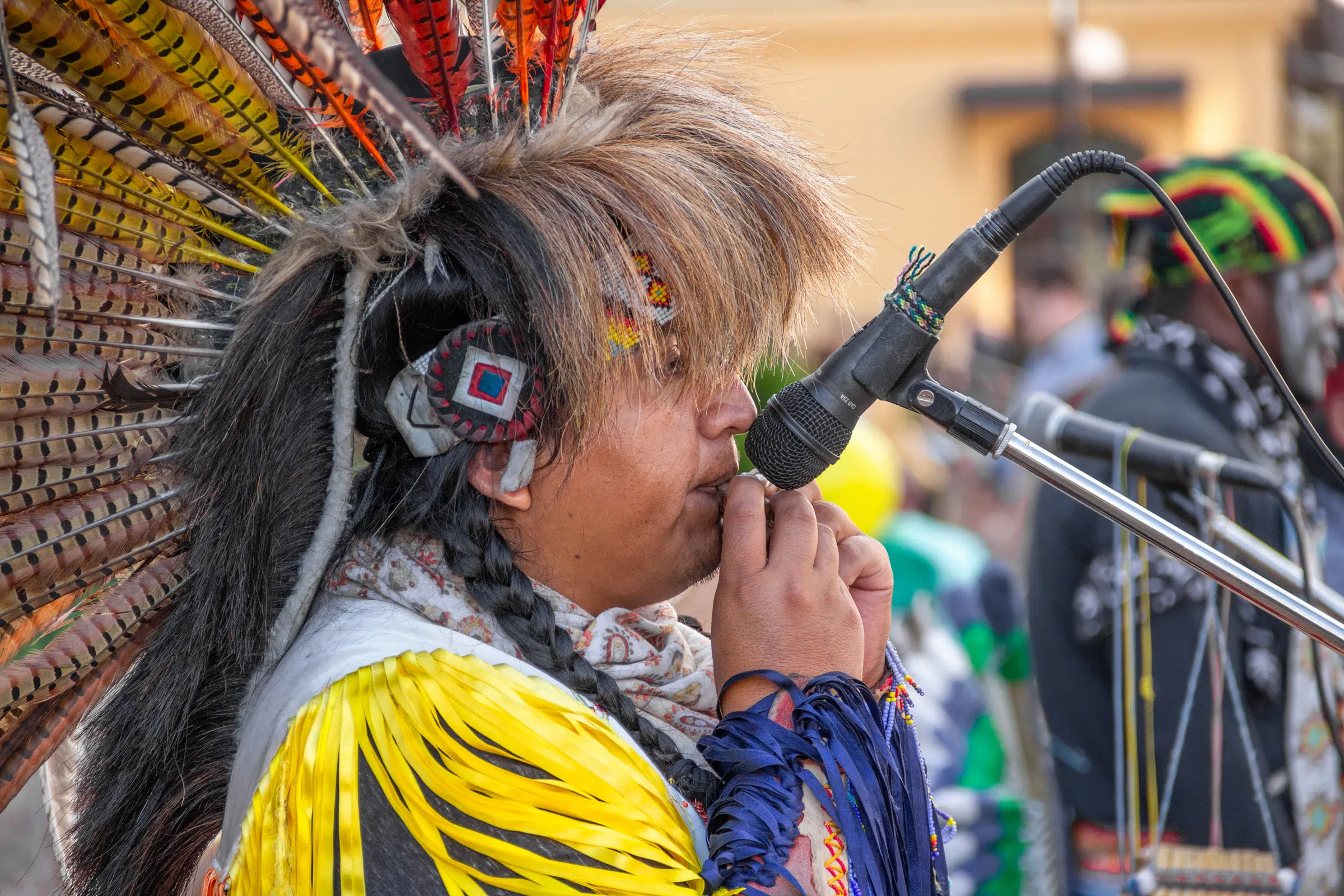
- Sacred Regalia vs. “Costumes”: This one’s non-negotiable. Never call Native American regalia “costumes.” Regalia is personal, often sacred, and includes “earned pieces that are important to the individual wearer”. Using “Traditional Native American headdresses… as fashion accessories” is textbook appropriation and deeply offensive.
- The “One-Size-Fits-All” Stereotype: This is probably the biggest mistake people make, treating all Indigenous people like they’re one homogenous group. According to the National Congress of American Indians, there are over 574 federally recognized Nations in the U.S. alone. Using a Plains headdress, a totem pole, or a tepee to “celebrate” all first peoples isn’t just wrong; it’s literally the definition of stereotyping. The legal fix? Be specific.
How to Celebrate Respectfully and Legally
The whole point of Native American Heritage Month is to honor and celebrate the culture, provide an opportunity for learning, and raise awareness of the challenges faced by the Indigenous communities. The safest legal approach? Act as a facilitator, not a performer.
- Amplify Native American Voices: Don’t put your one Native American employee on the spot and ask them to “share their culture” with the office. That’s tokenism, and it puts an unfair burden on them. Instead, pay Indigenous people for their expertise. Bring in a speaker from a local Native American organization or cater a “lunch and learn” from an Indigenous-owned business.
- Curate, Don’t Create: Your HR team shouldn’t be making materials from scratch. Instead, share the authoritative, pre-vetted, and respectful resources that federal institutions have already created. The National Park Service, the Library of Congress, the Smithsonian, and the National Archives all offer tons of online exhibits, histories, and educational materials.
- Make it Voluntary (A Critical Legal Defense): All celebrations, luncheons, and activities need to be 100% voluntary. If an employee chooses not to participate, respect that decision—no questions asked. This one simple step helps prevent any claim that the event was a mandatory “term or condition of employment,” which is a major component of a harassment or discrimination claim.
- Adopt a Systemic, Inclusive Framework: The best long-term strategy is to “eliminate the bias toward national and Christian-centered holidays” by offering floating holidays. This lets employees celebrate their own heritage authentically—whether that’s Native American Heritage Day, Yom Kippur, or Diwali—while taking the employer (and the legal risk) out of the equation of “performing” a cultural celebration.
Call a New York Employment Law Attorney Now
We at Filippatos PLLC stand in proud solidarity with any and all workers facing discrimination in the workplace, including the diverse communities that make up our city and country. We believe that all people deserve the right to exist freely, no matter who they love, how they express their gender, practice their religion, or celebrate their heritage. If you are experiencing discrimination at work, please give us a call at 888-9-JOBLAW for a free consultation. We will do our utmost to help secure you the justice you deserve.